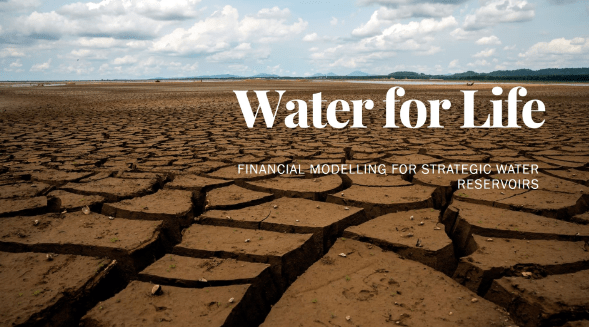
With climate change exacerbating water scarcity, strategic water reservoirs have become essential for ensuring water security, particularly in drought-prone regions. These large infrastructure projects play a crucial role in capturing and storing water during periods of abundance, which can then be used during droughts or dry seasons. However, the complexity of financing such projects requires a robust and adaptable financial model to account for various risks and returns.
The Role of Financial Modelling 🧮
Financial models in strategic water reservoir projects are fundamental to determining the long-term viability and sustainability of the venture. These models consider several critical factors:
- Capital Expenditure (CapEx): Reservoir construction involves significant upfront costs, from land acquisition to infrastructure development. The financial model must accurately project these expenditures, including contingency costs for unexpected delays or regulatory changes.
- Operational Expenditure (OpEx): Once constructed, reservoirs require regular maintenance to ensure they function effectively. Operational costs can fluctuate based on water treatment requirements, infrastructure wear and tear, and evolving environmental regulations. Incorporating realistic OpEx forecasts helps in evaluating the long-term cost of running the reservoir.
- Revenue Modelling: One of the complexities in financing water reservoirs is the revenue model, especially when water pricing is regulated by the government. To address this, the financial model often includes public-private partnerships (PPPs) or user-pays frameworks. Such models assess the viability of selling water to utilities, industrial users, or municipalities, with provisions for tariff adjustments over time.
- Risk Management: Droughts, regulatory changes, and environmental concerns add layers of uncertainty. Modern financial models incorporate scenario analysis to predict how different climate and regulatory scenarios might impact the project. This ensures the project remains viable even under adverse conditions, such as prolonged droughts, increased treatment costs, or political changes that affect water pricing.
- Funding and Financing Structures: Given the long lifecycle of water reservoir projects, securing a sustainable financing structure is key. Financial models consider a mix of equity, debt, and government grants. With a rising focus on green financing, these projects may also access climate-related funds, particularly when they align with sustainability goals such as reducing groundwater depletion.
Key Considerations in Modelling for Drought-Prone Regions 🌍
- Climate Variability: The volatility in rainfall patterns due to climate change is a primary concern. Financial models need to integrate climate risk modelling that projects how much water can be captured and stored, and for how long it will be sufficient during drought periods.
- Regulatory Changes: Governments frequently adjust policies related to water use, especially in regions facing water scarcity. Therefore, it is essential to include regulatory risk, ensuring the project can adapt to new water-use policies or conservation mandates.
- Community Impact: Water reservoirs often involve displacing communities or impacting ecosystems. The financial model should include provisions for compensation and community engagement to mitigate social risks.
- Innovative Financing Models: In recent years, blended finance has emerged as a potential solution for funding such projects. By combining public funding with private investment, often under a PPP model, stakeholders can reduce risks while promoting private sector involvement. This approach ensures that even in water-stressed regions, financing can be secured for large infrastructure investments.
Why Financial Modelling Matters 💼
For stakeholders—whether governments, private investors, or multilateral institutions—the ability to rely on sound financial models is critical for decision-making. These models help evaluate not just the profitability, but the resilience of the project in the face of growing water demand and environmental pressures.
Moreover, financial models are often the blueprint for securing financing. Investors and lenders are increasingly focused on sustainability metrics, and models that incorporate environmental, social, and governance (ESG) factors stand a better chance of receiving funding.
Ready to develop a resilient water infrastructure project? At Finteam, we specialise in creating financial models that balance sustainability with profitability, ensuring your water projects are both environmentally and financially viable. Let’s collaborate to secure the future of water resources! 💧🔗
 Finteam