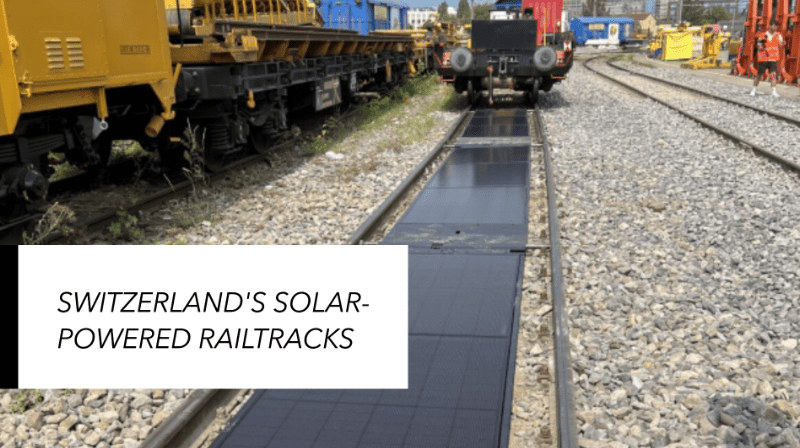
Switzerland is leading the way in innovative renewable energy solutions by installing solar panels directly on railway tracks. This groundbreaking initiative aims to repurpose existing infrastructure, combining the efficiency of railway networks with the increasing demand for solar power. The project is a unique way to maximize energy generation without taking up additional land, addressing both spatial efficiency and environmental impact.
The Project Overview
The Swiss Federal Railways (SBB) has recently rolled out a pilot project where solar panels are installed between railway tracks. This project aims to utilize the vast rail network, which covers thousands of kilometers across the country, to generate renewable energy. The idea is to make productive use of the unused space between tracks, thereby maximizing the surface area available for solar energy harvesting without affecting rail operations.
The pilot installation, which involves several hundred meters of rail track, is expected to generate enough electricity to power hundreds of homes. If successful, this technology could be scaled up to cover larger parts of the railway network, representing a significant step towards meeting Switzerland’s renewable energy targets. Not only does this initiative produce green energy, but it also aligns with the country’s broader sustainability goals, aiming for Net Zero by 2050.
Benefits and Challenges
The project presents several potential benefits:
- Efficient Land Use: Solar energy projects often require large areas of land, but by installing panels on existing railway tracks, this project efficiently uses space that would otherwise be left idle. This approach minimizes the impact on Switzerland’s valuable landscape and natural environment. 🌱
- Renewable Energy Integration: Solar panels on railway tracks could supply clean electricity directly to the rail network, reducing the carbon footprint of train operations. Integrating renewable energy into public infrastructure is a major step forward in creating a sustainable transport system.
- Scalability: With thousands of kilometers of rail track across Switzerland, the potential to scale this initiative is enormous. If the pilot proves successful, the project could serve as a model for other countries looking to integrate renewable energy into their existing infrastructure. 🌍
However, the project also comes with technical challenges. The panels must withstand the heavy mechanical loads and vibrations generated by passing trains, as well as adverse weather conditions such as snow, ice, and rain. To address these challenges, the panels are designed to be robust and resilient, ensuring they remain operational over their expected lifespan.
Impact and Future Outlook
The success of this initiative could have far-reaching implications for renewable energy projects worldwide. By repurposing infrastructure in novel ways, Switzerland is demonstrating that innovative thinking can significantly contribute to the energy transition. Using railway infrastructure for energy generation creates a new paradigm for integrating renewable energy into urban and rural settings without disrupting other essential services.
Scaling the project could mean generating a considerable amount of electricity, potentially enough to cover a significant portion of the energy needs for the national rail network. Additionally, this project aligns with broader European sustainability initiatives and could inspire similar projects across the continent. The concept of using idle infrastructure space for renewable energy is a win-win for both energy and transport sectors. 🚄🔋
Conclusion
Switzerland’s solar panel railway project is a groundbreaking example of how existing infrastructure can be adapted for renewable energy generation. This initiative not only optimizes land use but also contributes to the development of a more sustainable transport system. As the project progresses, it could provide a model for integrating renewable energy with minimal land impact, aligning perfectly with global sustainability goals.
Are you ready to think creatively about how to integrate renewable energy into existing infrastructure? Switzerland’s example could be just the inspiration you need. 🌱💡 Let’s discuss how these innovative solutions can shape the future of sustainable development!
 Finteam