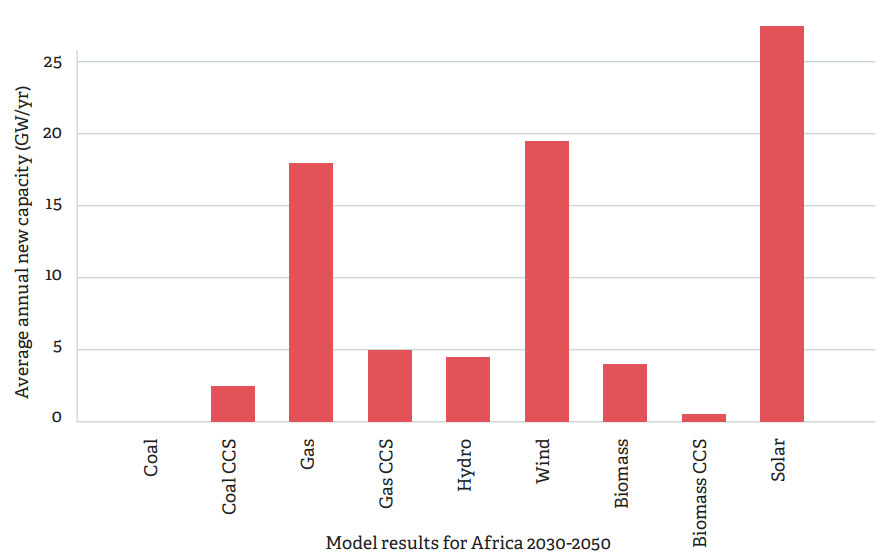
in van der Zwaan, et al., (2018)
When it comes to decarbonising electricity grids, Africa faces challenges that are fundamentally different from those of wealthier economies. Unlike mature energy infrastructures in advanced nations, most African countries are starting from a very low base and need to rapidly expand their power networks to achieve urgent development objectives. This means that the energy transition in Africa is more of a ‘vertical’ expansion—total output must grow severalfold—compared to the ‘horizontal’ transition seen in developed nations where the goal is to shift to renewables while keeping overall demand relatively stable. 📈🔋
Horizontal vs Vertical Energy Transitions
In mature economies, electricity demand is relatively flat, and they are starting from a sophisticated base with well-established power systems that rely on fossil fuels, which can gradually be replaced with variable renewable energy sources (VREs) like solar and wind. While these economies expect some rise in electricity demand—such as from the electrification of vehicles and heating—they can depend on existing power resources to handle intermittency as they incorporate more renewables. This is a horizontal transition, where changes are incremental, and reliance on fossil generation is slowly reduced. ⚡🚗🔥
In Africa, the story is different. African countries are looking to multiply their electricity supply severalfold within a span of decades. This rapid growth trajectory demands not only an increase in renewable energy but also an interim reliance on gas generation to ensure energy stability. The typical African energy transition can be thought of as ‘vertical’, aiming to achieve exponential growth in total power output while still decarbonising. The challenges of this approach are unique, as they involve building new infrastructure, integrating renewables, and scaling power output rapidly to meet growing demands. 📊🌿
Leapfrogging Fossil Fuels: Reality vs Aspiration
There is often talk about African nations being able to leapfrog fossil fuels—avoiding the dependence on coal and oil that developed countries once relied upon. While it is true that African countries can utilise more renewable energy and embrace decentralised solutions, this does not mean that the continent can simply leap to 100% renewable grids overnight. In reality, investments in a mix of generation technologies are necessary for a balanced and sustainable transition. The most stringent climate control scenarios still foresee the need for gas alongside renewables in Africa’s energy mix over the medium term to maintain grid stability. 🌞🌬️⚡
For example, a study by van der Zwaan et al. (2018) shows that, between 2030 and 2050, the most ambitious climate mitigation scenario for Africa includes significant capacity additions in solar (24GW), wind (20GW), and gas (18GW). This blend ensures that the energy transition is robust enough to meet both development and decarbonisation goals. African countries can make far greater use of renewables and quickly relegate gas to a peripheral role, but it requires thoughtful planning and strategic investments. 🌀💡💰
How the International Community Can Support
The global carbon budget has little room for new greenhouse gas emissions, but if there is a need to accommodate Africa’s economic development, it should come from wealthier economies taking more aggressive actions—such as accelerating the decommissioning of large coal plants. 🌍⚖️ Countries like China, Germany, and South Korea could make room for Africa’s development by retiring just a few of their largest coal plants, helping balance global emissions while enabling African nations to pursue least-cost development pathways. This equitable approach acknowledges the stark differences in energy needs and infrastructure development across the world.
The Path to Sustainable Development
African nations will not achieve their development aspirations, particularly SDG 1 (No Poverty), SDG 7 (Affordable and Clean Energy), and SDG 8 (Decent Work and Economic Growth), without a massive expansion in the supply of reliable and affordable electricity. Decentralised solutions, such as mini-grids and off-grid solar systems, offer hope for rural areas, but reliable centralised grids are also crucial for meeting the needs of larger enterprises, especially in urban regions. The path forward requires a mix of regulatory reforms, infrastructure investment, and enhanced operational capabilities—including advanced grid management, energy storage integration, and regional power pooling. 🌐🏙️🔋
A Call for Collective Action
If the international community wishes to accelerate Africa’s energy transition, the focus must be on investments that lay the groundwork for a future where fossil fuel reliance is minimal. Areas for support include regulatory and market reforms, early adoption of energy storage, and investments in transmission and distribution infrastructure. Moreover, developing advanced grid management capabilities—such as Automatic Generation Control (AGC), demand response, and weather forecasting—will be key to managing the higher shares of renewable energy needed for a sustainable future. 🌿💡⚡
The stakes are high, but so is the potential for progress. By recognising the unique challenges and opportunities faced by African countries, investors and policymakers can help shape an energy future that is both sustainable and equitable, ensuring that Africa’s energy transition serves as a model of innovation and growth for the rest of the world. 🌍✨🔋
Are you ready to be part of Africa’s energy transformation? Let’s work together to ensure that Africa can meet its development goals while building a cleaner, greener energy system for future generations.
 Finteam