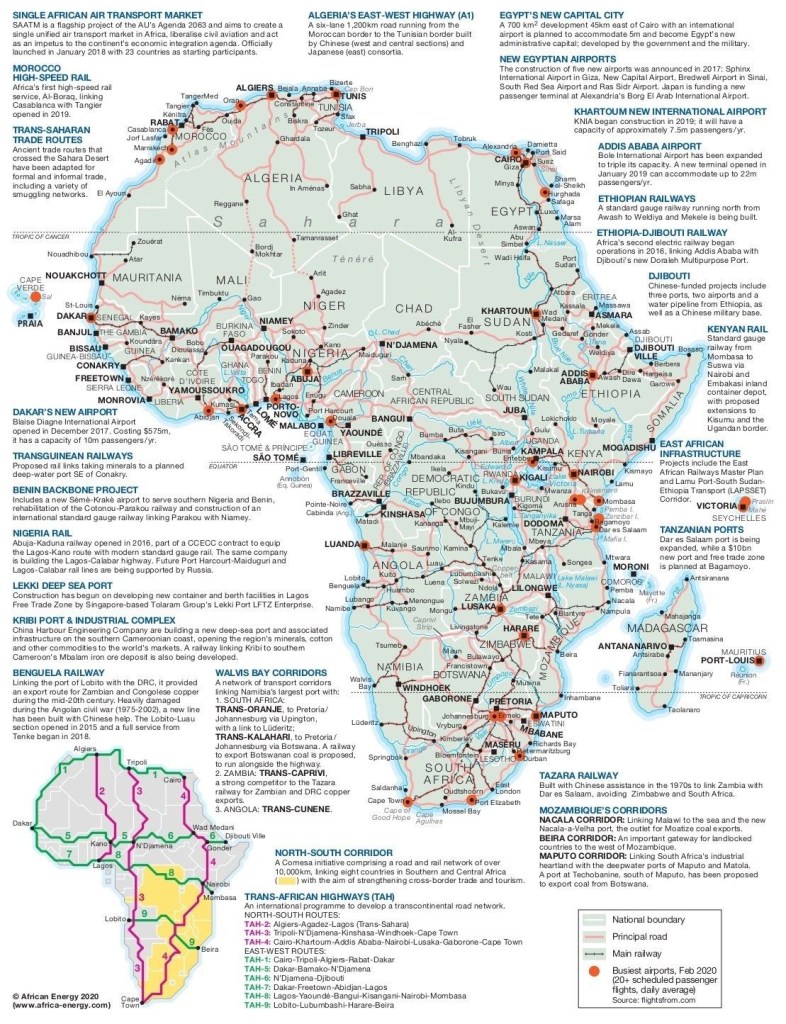
Africa’s transformative journey towards economic integration and sustainable growth hinges on one critical factor: infrastructure development. The above map highlights a tapestry of ambitious projects that are shaping the continent’s future, spanning railways, highways, ports, and air transport markets. Let’s delve into these initiatives and what they mean for Africa’s economic future.
𝗖𝗼𝗻𝗻𝗲𝗰𝘁𝗶𝗻𝗴 𝗔𝗳𝗿𝗶𝗰𝗮: 𝗔 𝗖𝗼𝗻𝘁𝗶𝗻𝗲𝗻𝘁 𝗢𝗻 𝗧𝗵𝗲 𝗠𝗼𝘃𝗲
1. The Single African Air Transport Market (SAATM): ✈️ Officially launched in 2018, SAATM is the flagship initiative of the African Union’s Agenda 2063. It aims to liberalize aviation across Africa, fostering connectivity among 23 participating countries. By enabling efficient air transport, this initiative is expected to accelerate trade, tourism, and cultural exchange.
2. Morocco’s High-Speed Rail: 🚄 Connecting Casablanca, Rabat, and Tangier, Morocco’s high-speed rail exemplifies Africa’s ambition to modernize its transportation infrastructure. This investment in cutting-edge rail networks signals the continent’s commitment to reducing travel times and boosting regional trade.
𝗔 𝗪𝗲𝗯 𝗢𝗳 𝗖𝗿𝗼𝘀𝘀-𝗖𝗼𝗻𝘁𝗶𝗻𝗲𝗻𝘁𝗮𝗹 𝗧𝗿𝗮𝗻𝘀𝗽𝗼𝗿𝘁
1. Egypt’s New Administrative Capital: 🏙️ Located 45 km east of Cairo, this project features a state-of-the-art international airport and is part of a larger initiative to create a new administrative hub. The development aims to decongest Cairo and provide modern infrastructure for governance and business.
2. The Trans-Saharan Trade Route: 🛤️ Spanning Algeria, Mali, Niger, and beyond, this trade route revives Africa’s historical commercial corridors, facilitating the movement of goods and services and connecting remote regions to global markets.
𝗥𝗮𝗶𝗹𝘄𝗮𝘆 𝗥𝗲𝘃𝗶𝘁𝗮𝗹𝗶𝘇𝗮𝘁𝗶𝗼𝗻
1. Nigeria’s Rail Network: 🚆 Ongoing upgrades to standard gauge rail lines, such as the Lagos-Ibadan railway, symbolize Nigeria’s push to enhance regional connectivity. These developments are pivotal for reducing transportation costs and boosting industrial growth.
2. TAZARA Railway: 🛤️ Built in the 1970s, the Tanzania-Zambia Railway (TAZARA) remains a lifeline for trade in East Africa, connecting Zambia’s copper belt to the port of Dar es Salaam. Modernization efforts aim to restore its efficiency and expand its capacity.
𝗣𝗼𝗿𝘁𝘀 𝗮𝗻𝗱 𝗧𝗵𝗲𝗶𝗿 𝗖𝗿𝘂𝗰𝗶𝗮𝗹 𝗥𝗼𝗹𝗲
1. Lekki Deep Sea Port: ⚓ With state-of-the-art facilities, this port in Nigeria is transforming Lagos into a major trade hub. Its connection to the Lekki Free Trade Zone is set to enhance Nigeria’s role as a gateway for West Africa.
2. Kribi Port in Cameroon: 🛳️ Developed with Chinese support, this industrial complex underscores Africa’s strategy to leverage international partnerships to boost regional trade.
𝗔 𝗩𝗶𝘀𝗶𝗼𝗻 𝗳𝗼𝗿 𝗧𝗵𝗲 𝗙𝘂𝘁𝘂𝗿𝗲
1. Trans-African Highways (TAH): 🛣️ From Cairo to Cape Town, the Trans-African Highways initiative envisions a seamless road network crisscrossing the continent. These routes are essential for intra-African trade and collaboration.
2. North-South Corridor: 🚚 This 10,000 km multi-modal route integrates roads, railways, and ports, enhancing connectivity from Southern Africa to East Africa. The corridor is a cornerstone of Africa’s regional integration strategy.
𝗧𝗵𝗲 𝗜𝗺𝗽𝗮𝗰𝘁
Africa’s infrastructure developments are more than just projects; they represent a paradigm shift in how the continent is integrating its economies and connecting to global markets. These initiatives will reduce the cost of doing business, open up underserved regions, and create countless jobs across sectors.
𝗧𝗵𝗲 𝗙𝘂𝗹𝗹 𝗣𝗼𝘁𝗲𝗻𝘁𝗶𝗮𝗹
As we look ahead, it is imperative for governments, investors, and international stakeholders to sustain momentum. The success of these projects hinges on continued funding, political will, and collaboration across borders.
𝗔𝗳𝗿𝗶𝗰𝗮 𝗶𝘀 𝗼𝗻 𝘁𝗵𝗲 𝗰𝘂𝘀𝗽 𝗼𝗳 𝗮𝗻 𝗶𝗻𝗳𝗿𝗮𝘀𝘁𝗿𝘂𝗰𝘁𝘂𝗿𝗲 𝗿𝗲𝗻𝗮𝗶𝘀𝘀𝗮𝗻𝗰𝗲, and the world is watching. Let’s harness this momentum to ensure that Africa’s infrastructure dreams become reality, creating a brighter, more connected future for generations to come.
 Finteam