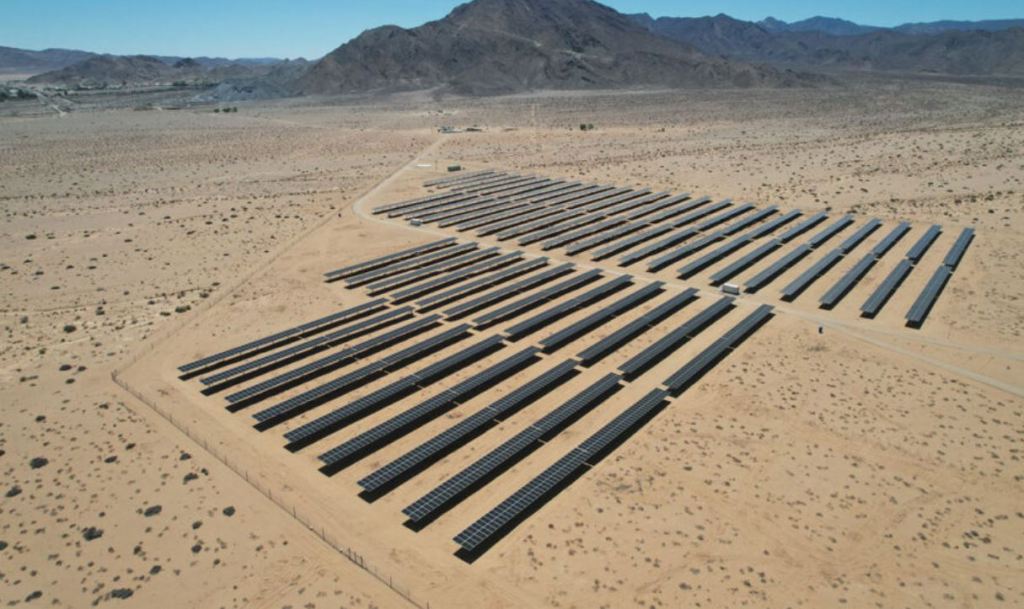
Appian Capital Advisory has announced its acquisition of a majority stake in the Rosh Pinah Solar Park (RPSP) from Emesco Energy, marking a significant step in its clean energy strategy. The solar facility will provide renewable power to Rosh Pinah Zinc Corporation’s mine, ensuring cost savings and carbon footprint reduction. This investment aligns with Appian’s broader efforts to integrate sustainable energy solutions within its portfolio, ensuring both financial and environmental benefits.
Key Highlights of the Deal☀️
✅ Solar Expansion: Increasing capacity from 5.4MWp to 16.3MWp to meet 30% of the mine’s expanded energy needs.
✅ Cost Efficiency: Reducing energy costs by 8% for the next 15 years via a fixed-rate offtake agreement.
✅ Carbon Reduction: Cutting 14kt of CO₂ emissions per year, equivalent to planting over 20,000 trees.
✅ Energy Security: Enhancing Namibia’s energy independence by lowering reliance on imported power.
Strategic Impact
📊
- Boosts Mine Production: Supports RP2.0 expansion, increasing ore output from 0.7Mt to 1.3Mt per year, ensuring operational efficiency and business growth.
- Leverages Appian’s Solar Expertise: Builds on Appian’s experience from operating 20 solar plants in Brazil, leveraging expertise to maximize efficiency.
- Sustainable Investment: Aligns with Appian’s broader decarbonization and cost-saving strategies, positioning the company as a leader in renewable energy integration for industrial operations.
- Local Economic Development: Creates job opportunities and skill-building programs for local communities, enhancing Namibia’s workforce capacity in solar energy operations and maintenance.
Financial Modelling & Investment Perspective 💰
For investors, large-scale solar projects require a robust financial modelling approach to ensure sustainability and profitability. Some key aspects include:
- Revenue Projections: Forecasting power sales through long-term Power Purchase Agreements (PPA) to ensure consistent revenue streams.
- CapEx & OpEx Considerations: Evaluating upfront investment costs vs. long-term operational savings, factoring in equipment lifespan and maintenance.
- Risk Management: Addressing challenges such as currency fluctuations, regulatory risks, and energy demand shifts.
- Return on Investment (ROI): Analyzing project viability through Net Present Value (NPV) and Internal Rate of Return (IRR) calculations, ensuring the project aligns with investor expectations.
- Carbon Credit Opportunities: Leveraging emissions reduction as a financial incentive, potentially selling carbon credits to offset costs.
Namibia: A Solar Energy Hub 🌍
With some of the highest solar energy yields in the world, Namibia is well-positioned for renewable energy investments. The country imports 75% of its energy, making local solar projects critical for achieving energy security and sustainability. The government has actively supported Independent Power Producers (IPPs) to help diversify its energy mix, and Appian’s investment further cements Namibia’s transition to clean energy.
Namibia’s favorable regulatory framework, combined with its abundant solar potential, provides an attractive environment for foreign direct investment (FDI) in the renewable energy sector. This project will also serve as a model for similar large-scale industrial renewable energy integration across Africa.
Looking Ahead 🔍
Appian’s commitment to renewable energy is evident as it explores further energy supply enhancements for Rosh Pinah Zinc. With Emesco continuing to operate and develop the plant, the project promises long-term benefits for Namibia’s energy landscape.
Additionally, as Namibia looks to become a regional leader in solar energy production, projects like RPSP pave the way for future partnerships and investment opportunities in hybrid renewable energy systems, including solar-wind hybrids and battery storage solutions.
📊 Interested in financial modelling for solar investments? Connect with Finteam for tailored strategies that maximize bankability and returns! 🚀
 Finteam