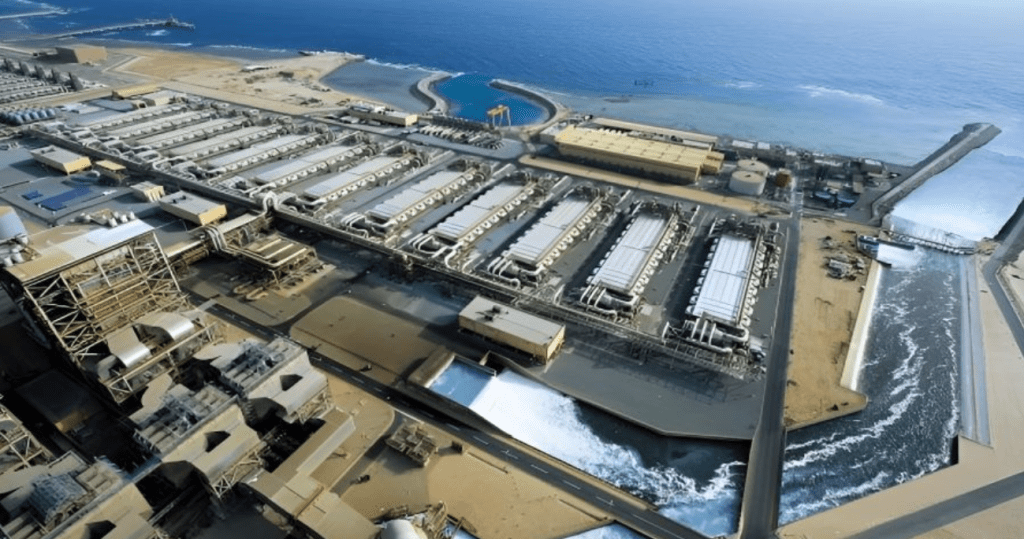
Morocco is embarking on a transformative journey to address its escalating water scarcity challenges. The nation is constructing Africa’s largest desalination plant in Casablanca, powered entirely by renewable energy. This initiative not only aims to secure water resources but also sets a precedent for sustainable infrastructure development on the continent. 🌍💧⚡
A Strategic Response to Water Scarcity
Morocco has been grappling with severe droughts, with the current one being the worst in four decades. Reservoirs are at historically low levels, threatening agriculture, drinking water supplies, and the broader economy. In response, the government has prioritized desalination as a key strategy to ensure water security. By 2030, Morocco aims to produce half of its drinking water through desalination. 🌾🚱🛠️
The Casablanca Desalination Plant: An Overview
- Location: Sidi Rahal, approximately 40 km south of Casablanca.
- Capacity: 300 million cubic meters per year, supplying drinking water to 7.5 million people and supporting agricultural use.
- Technology: Reverse osmosis powered entirely by the 360 MW Bir Anzarane wind farm, dedicating 47% of its output to the plant.
- Investment: €613 million, structured as 80% debt and 20% equity.
- Consortium: Al Baidaa Desalination Company, comprising ACCIONA (50%), Green of Africa (45%), and AfriquiaGaz (5%).
- Timeline: First phase operational by February 2027; full completion by August 2028.
Financial Structuring and International Collaboration
The project’s financing reflects a robust public-private partnership model: 💼📉🤝
- Debt Financing: €340 million from Spanish institutions, including a €250 million loan from the Fund for Business Internationalisation (FIEM), a €70 million loan backed by CESCE, and €31 million from FIEX managed by COFIDES.
- Equity Participation: ACCIONA leads with a 50% stake, bringing extensive experience in infrastructure development.
- Local Involvement: Green of Africa and AfriquiaGaz contribute local expertise and resources, ensuring alignment with national objectives.
Implications for Financial Modeling in Renewable Infrastructure
From a financial modeling perspective, this project presents several noteworthy aspects: 📊💡🧮
- Revenue Streams: Long-term water purchase agreements (WPAs) provide predictable cash flows, essential for debt servicing and return on equity.
- Operational Expenditures (OPEX): Utilizing wind energy reduces OPEX compared to fossil fuel-powered desalination, enhancing the project’s net present value (NPV).
- Risk Mitigation: The integration of renewable energy sources and the involvement of reputable international financiers mitigate operational and financial risks.
A Model for Sustainable Development
This project aligns with Morocco’s National Water Plan and the National Program for Drinking Water Supply and Irrigation 2020-2027, aiming to restore water availability and ensure sustainable management of water resources. By leveraging renewable energy, the plant exemplifies how infrastructure can be both sustainable and economically viable. 🌱🏗️📉
Conclusion
The Casablanca desalination plant stands as a testament to Morocco’s commitment to addressing water scarcity through innovative and sustainable solutions. Its successful implementation could serve as a blueprint for other nations facing similar challenges, demonstrating the potential of combining renewable energy with essential infrastructure development. 🌐📈🔧
 Finteam