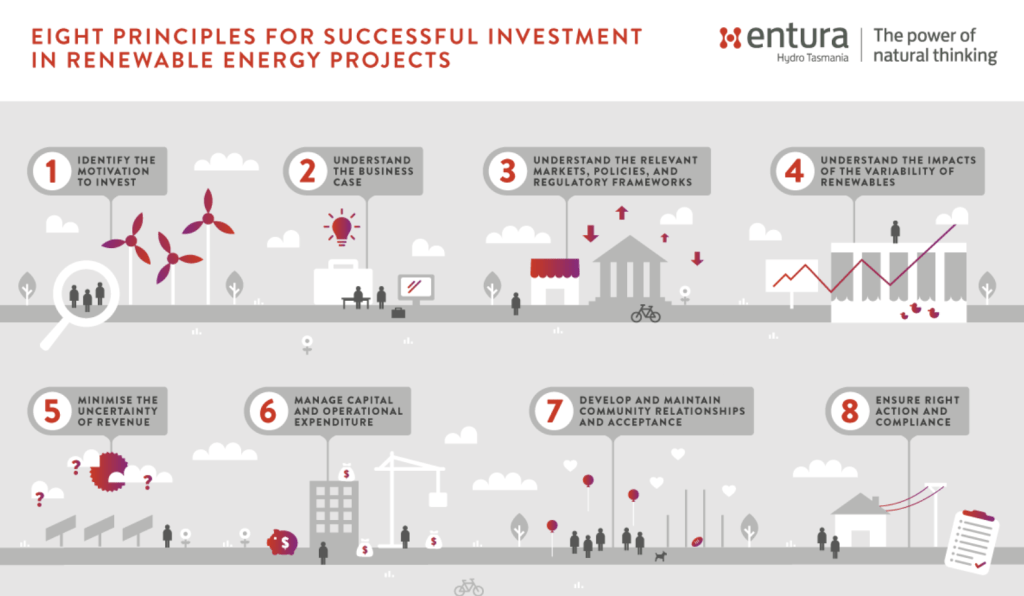
Developing a financial model for a renewable energy project, such as a wind farm or solar installation, is a highly technical endeavor that underpins critical investment decisions. For advanced financial modelers, this process involves creating detailed, assumption-driven frameworks that capture the complex dynamics of project development, operation, and financing. Below, we walk through the core components and considerations essential for building a bankable renewable energy financial model. 📈📘💡
Defining the Project Scope and Technical Assumptions
The first step in constructing a financial model is defining the project’s scope and the underlying assumptions. This involves quantifying the net installed capacity—often tailored to regulatory thresholds (e.g., 49.8 MW to stay under certain permitting caps)—and estimating the energy generation profile using high-resolution meteorological datasets like ERA5 or MERRA-2. Technical losses must be considered at this stage, including inverter inefficiencies, transformer losses, and expected availability factors. ⚙️📉🔍
On the capital expenditure side, costs should be disaggregated into specific categories: EPC contracts, interconnection infrastructure, development fees, and contingencies, which typically range from 5 to 10 percent of total CAPEX. Pre-financial close expenditures such as permitting, land acquisition, and grid studies should also be incorporated. 🏗️🧾📂
Operating expenditures are modeled with appropriate escalation indices—usually linked to consumer price indices or maintenance contracts. Additionally, significant maintenance events, like inverter replacements for solar PV around year 10, should be treated as capital injections rather than regular OPEX. 🧰📆💸
Tariff structures are usually defined by long-term power purchase agreements (PPAs). These may feature fixed escalation clauses or be indexed to inflation or foreign exchange rates, especially in cross-border projects. Financing assumptions should account for debt tenors, grace periods, and debt repayment structures—whether annuity-style or sculpted based on cash flows available for debt service (CFADS). Also, define equity IRR hurdle rates and dividend lock-up mechanisms triggered by DSCR covenants. 📑🔒📊
Constructing the Model Architecture
A robust financial model requires a clean, modular architecture with a clear separation between input assumptions and calculated outputs. Input sheets must use data validation and named ranges to ensure transparency and ease of updates. The model should include an energy yield sheet where P50, P75, and P90 generation scenarios are calculated, applying degradation curves—typically around 0.5% annually for solar PV. 🧮🗂️📈
Revenue projections must differentiate between PPA-based and merchant-market sales. The latter may involve forecasting spot prices and incorporating penalties for imbalance or curtailment, as well as any performance incentives. Costs should be laid out with a time series projection, incorporating inflation impacts and logic to manage contingency drawdowns. 📉🛠️📆
Debt modeling is one of the most complex elements. It involves linking drawdowns to construction milestones, capitalizing interest before the commercial operation date, and managing repayments through sculpted profiles based on CFADS. The debt service reserve account (DSRA) must be dynamically sized, often tied to trailing or forward-looking debt service obligations. 🏦📊⛓️
Taxation requires country-specific treatment. This includes modeling for tax holidays, accelerated depreciation schemes like MACRS or straight-line depreciation with half-year conventions. These impact both net income and cash flows and must align with local tax codes and incentives. 🧾📉⚖️
At the heart of the model is the cash flow waterfall, which dictates the order of payments from CFADS—servicing debt, replenishing reserves, covering O&M obligations, and finally distributing equity returns. The model should also simulate cash traps and covenant compliance, such as minimum DSCR thresholds. 💧📉🔁
Output sheets should clearly present key metrics: Project IRR, Equity IRR, NPV at both project and equity levels, and coverage ratios such as DSCR (minimum, average, tail), loan life coverage ratio (LLCR), and project life coverage ratio (PLCR). Sensitivity and scenario analysis should be fully integrated using Excel data tables or dropdown toggles to facilitate investor presentations. 📊📌🔄
Advanced Risk Modeling and ESG Integration
To capture uncertainty, advanced models integrate stochastic risk analysis. Monte Carlo simulations—often with 10,000 iterations—can model variability in solar irradiance or wind speeds. Tornado charts help visualize sensitivity to key inputs such as CAPEX, tariffs, and generation levels. 🎲🌬️🔍
Environmental, Social, and Governance (ESG) metrics are increasingly requested by investors. These may include annual greenhouse gas offsets (in tCO2e), local job creation per megawatt, and projected economic multipliers for community impact. These should be explicitly modeled and reported alongside traditional financial KPIs. 🌍👷📑
Scenario planning tools should incorporate policy risk—such as tariff restructuring or subsidy withdrawal—and macroeconomic variables like FX depreciation or inflation shocks. Scenario toggles can quickly assess the impact of these variables on IRR and debt service capabilities. ⚠️📉💱
Technical Audit and Model Governance
Maintaining an audit trail is critical. Use cell-level comments and hyperlinks to source data where applicable. A dedicated control sheet should summarize toggles and flag any validation errors. 🧭📌🔎
Circular references should be minimized. Where iterative calculations are necessary (e.g., in tax depreciation loops), they must be clearly labeled and optimized for convergence. Incorporating formula audit tools can help detect circularity risks and ensure computational integrity. 🔁🧮📉
Version control mechanisms—such as time-stamped changelogs and macros for generating PDF snapshots—help track model evolution and ensure audit readiness. These controls are particularly important for models supporting financing rounds or lender due diligence. 🗃️🕒📂
Conclusion
A technically sound and transparent renewable energy financial model is more than just a set of spreadsheets. It serves as a critical tool for structuring debt, assessing equity strategies, and aligning with ESG frameworks. The most effective models integrate rigorous scenario planning, detailed project-specific inputs, and best-in-class Excel engineering. 🧠📈⚙️
For practitioners modeling solar PV projects, a high-quality starting point is the Finteam Solar PV Model Template on Eloquens: https://www.eloquens.com/tool/gyxxIMgg/finance/solar-project-financial-modeling/uk-solar-pv-excel-model.
By embedding financial, operational, and sustainability insights into a unified structure, your model becomes an indispensable asset for renewable energy development. 📊🌱💡
 Finteam