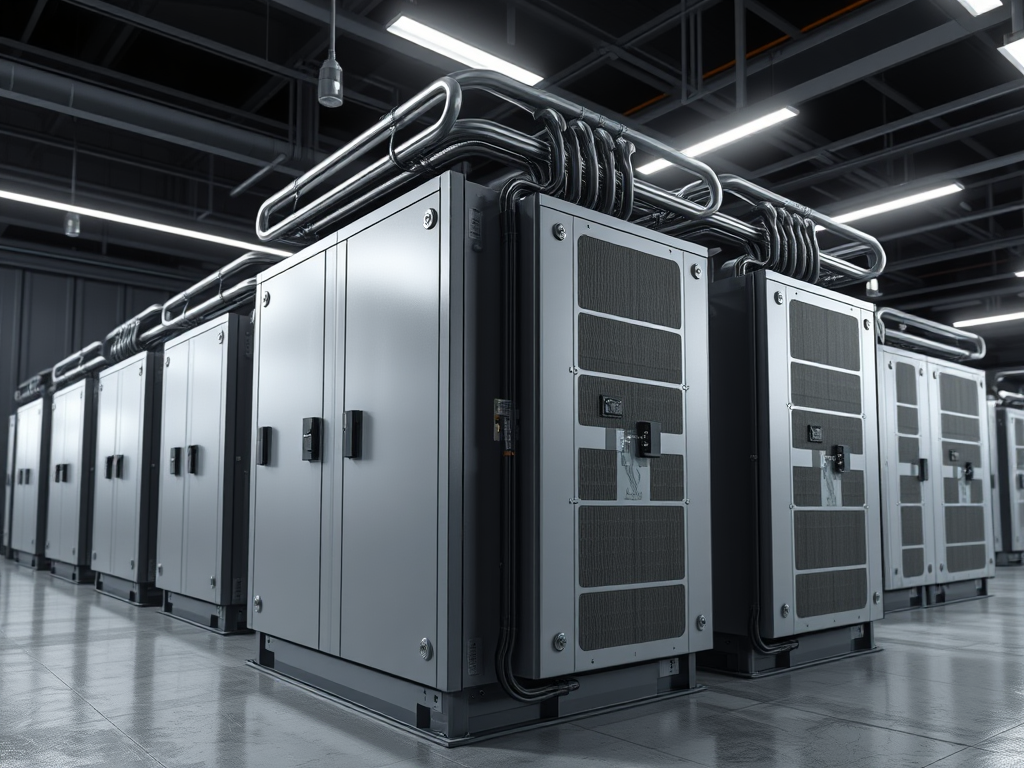
Battery Energy Storage Systems (BESS) are reshaping the renewable energy landscape, providing grid stability, peak shaving, and enhanced penetration of intermittent sources like solar and wind. Yet, the financing structures behind these projects vary widely across regions – influenced by market maturity, policy frameworks, and investor confidence. ⚡📊🌱
This article explores how different countries structure their BESS financing, the implications for project bankability, and what financial modellers should consider when assessing such assets. 🌍📈⚡
1. Mature Markets: Structured and Bankable Frameworks (EU, US, Australia) ⚙️💰🌍
In developed markets, battery financing is evolving rapidly, leveraging experience from utility-scale solar and wind projects. Key features include:
- Revenue Stacking: Projects often rely on multiple income streams – frequency regulation, capacity payments, arbitrage, and ancillary services. For example, in the UK, BESS assets participate in the Capacity Market while also trading in wholesale and balancing markets.
- Contracted vs. Merchant Exposure: Institutional lenders prefer hybrid structures that balance contracted revenues (via PPAs or grid services) with merchant exposure. Financial models incorporate stochastic simulations for energy prices to assess downside risk.
- Debt Tenors: Typically shorter than for solar or wind projects (5–10 years), reflecting the evolving technology risk and uncertainty in long-term market revenues.
For example, in Australia, long-term service agreements with state governments (like Victoria’s System Integrity Protection Scheme) enhance revenue certainty. 📈⚡🌱
2. Emerging Markets: Constrained Financing and Sovereign Dependence (Africa, Southeast Asia, Latin America) 🌍💸⚡
In contrast, emerging economies face structural challenges in BESS financing:
- Limited Revenue Certainty: Weak ancillary service markets and the absence of clear remuneration frameworks make it difficult to model predictable cash flows.
- High Cost of Capital: Weighted Average Cost of Capital (WACC) can exceed 12–15% in local currency, compared to 6–8% in OECD markets.
- Development Finance Institution (DFI) Dependence: Projects often rely on concessional loans, blended finance, or viability gap funding from entities such as the IFC, ADB, or AfDB.
A recent example is South Africa’s Battery Energy Storage IPP Procurement Programme, which uses a government-backed tariff structure to reduce investor risk. Yet, for most African nations, BESS remains in pilot stages, limiting bankability and scalability. 🌱📊🌍
3. Asian Powerhouses: Hybrid Financing and Industrial Integration (China, Japan, South Korea) ⚙️🔋🌏
Asian leaders approach BESS financing differently, emphasizing industrial policy alignment and vertical integration:
- China: Dominates the supply chain, with state-owned enterprises receiving low-interest loans from policy banks (e.g., China Development Bank). The focus is on large-scale integration with solar and wind clusters.
- Japan & South Korea: Encourage corporate-led financing, where battery manufacturers co-invest with utilities or grid operators. This structure allows alignment of technical and financial risks.
Financial modelling in these contexts requires integration of industrial subsidies, grid participation rules, and OEM risk-sharing mechanisms – often unique to each jurisdiction. 📈⚡🌱
4. Financial Modelling Implications and Risk Assessment 📊💻⚡
From a financial modeller’s perspective, regional variations demand tailored approaches:
- Revenue Forecasting: Incorporate probabilistic scenarios for energy price spreads, grid service remuneration, and degradation rates.
- Technology Risk: Model degradation (typically 1.5–2% per year) and battery replacement costs over the project life.
- Sensitivity Analysis: Key for merchant-dominated projects. IRR sensitivity to price volatility or capacity factor assumptions can exceed 200 bps.
Tools like the Battery Energy Storage System (BESS) 10-Year Financial Model on Eloquens (https://www.eloquens.com/tool/wyv8teXq/finance/renewable-energy-excel-financial-models-methods/battery-energy-storage-system-bess-10-year-financial-model?ref=finteam) offer robust frameworks to capture these complexities and ensure investor-grade analysis. 📊⚡🌱
5. The Future of Battery Financing: Standardization and Carbon Alignment 🌱🔋🌍
As the energy transition accelerates, battery storage will become a cornerstone of net-zero strategies. Expect to see:
- Greater use of carbon-linked financing instruments (e.g., sustainability-linked loans) where interest rates vary based on ESG performance.
- Standardized contract models (akin to PPAs) for storage-as-a-service solutions.
- Expansion of project bonds and securitization of operational BESS portfolios to attract institutional investors. ⚡📈🌏
Conclusion 🌍📊⚡
The financing of battery projects mirrors the energy transition itself: uneven, complex, and rapidly evolving. From government-backed tenders in Africa to merchant-driven investments in Europe, the diversity of structures presents both risk and opportunity. For financial modellers, mastering these nuances is key to unlocking the next wave of energy storage investments. ⚡🌱📈
 Finteam